Signalling trainers: Morse, semaphore, flags
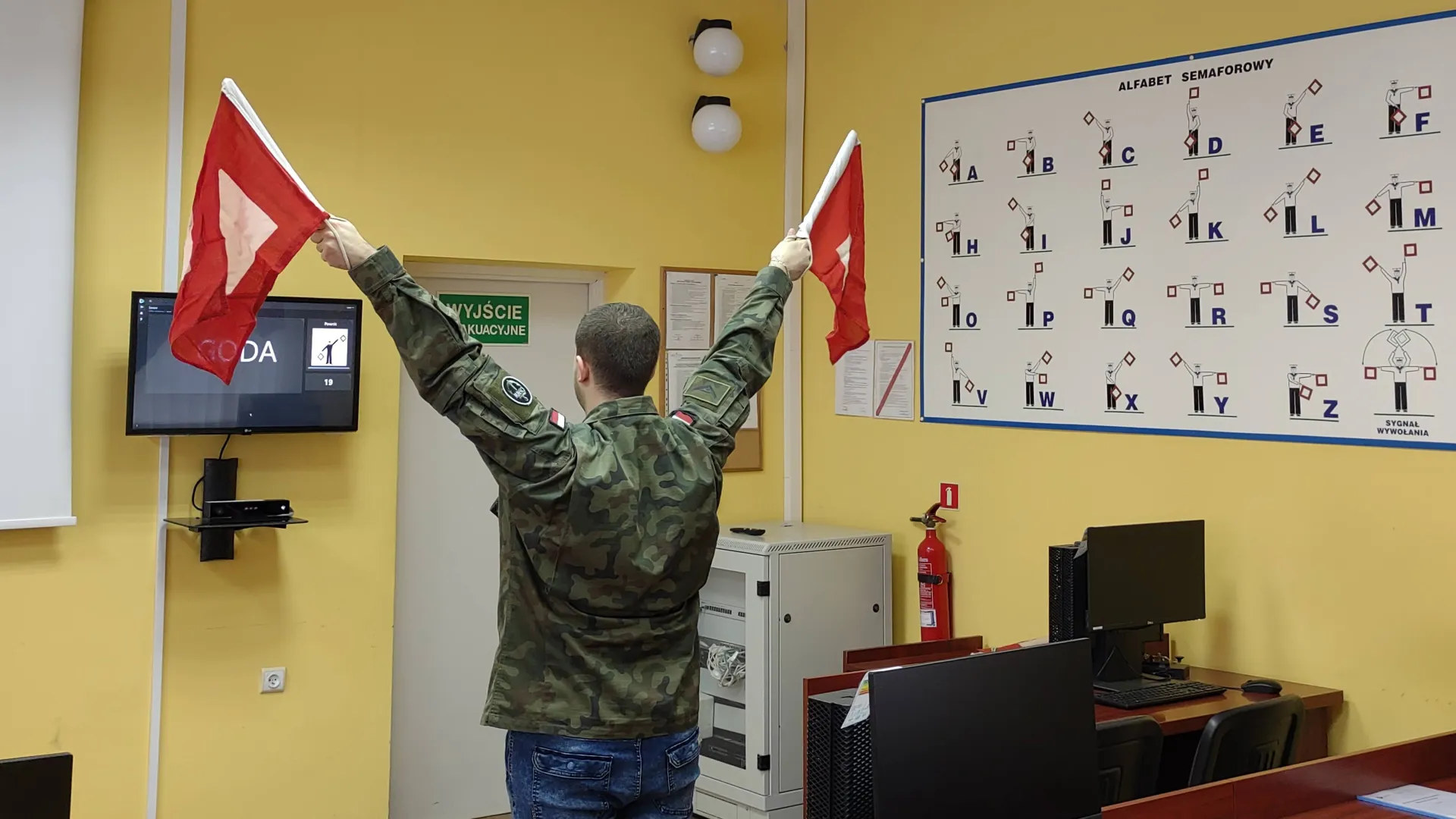
Visual signalling remains an important part of a sailor's training despite the prevalence of radio communications. Under radio silence or electronic-system failure, the ability to send and receive signals using Morse code, semaphore and signal flags can be irreplaceable. Learning these skills, however, takes hundreds of repetitions — and that is where modern trainers come in.
Why digital signalling trainers
Traditional signalling instruction is time-consuming and requires an instructor for every trainee. A digital trainer automates the drills, provides instant feedback and lets students learn at their own pace. An exam mode enables objective assessment of sending speed and receiving accuracy.
Three types of trainer
- Morse code trainer — learning to send and receive sound and light signals, with tempo control and a library of practice texts.
- Semaphore alphabet trainer — arm positions reproduced in 3D, with position-change animation and a motion sensor.
- Signal flags trainer — learning to recognise International Code of Signals flags and their meanings.
Signalling as part of training
All of our signalling trainers combine realistic reproduction with interactivity and measurable progress. As a result, naval academies and training centres can run a repeatable, objectively graded visual-signalling course — from the first letters to full proficiency.